This post is inspired by a student’s inflammed psoas muscles that happened two weeks ago, a day after a strength training session she did with a personal trainer.
Days later, it was almost coincidence that she tried a wall-sit when we were together at the swimming pool, and she said this was the last exercise she did at the gym.
At first look, I asked, why are your knees so wide apart?
”Oh I widened the knees so that I can be more stable.”
I was familiar with wall-sits but only mainly kept to those at hip width apart. Mostly because usually when the legs are in a wider stance, there is a tendency to tilt the pelvis forward (”tipping” the pelvis forward, a small lower back bend). For me, a hip width is usually better to keep the pelvis closer to neutral position.
It was then she recounted that maybe in her last effort to stay at the wall-sit, she must have pushed a little over the edge, getting the lower back closer to the wall. As the psoas is a deeply located muscle, it is mainly used as a stabiliser and also to propel movement. Hence, this little ‘push’ might have been a bit too much for that day.
From a holistic point of view as a student of yoga therapy, I am also considering the fact that she had a recent family emergency which might have taken a toll on her nervous system and perhaps mindfulness. Pain and injury are oftentimes not the effect of only one but many causes, usually compounded and not in a linear and obvious chain.
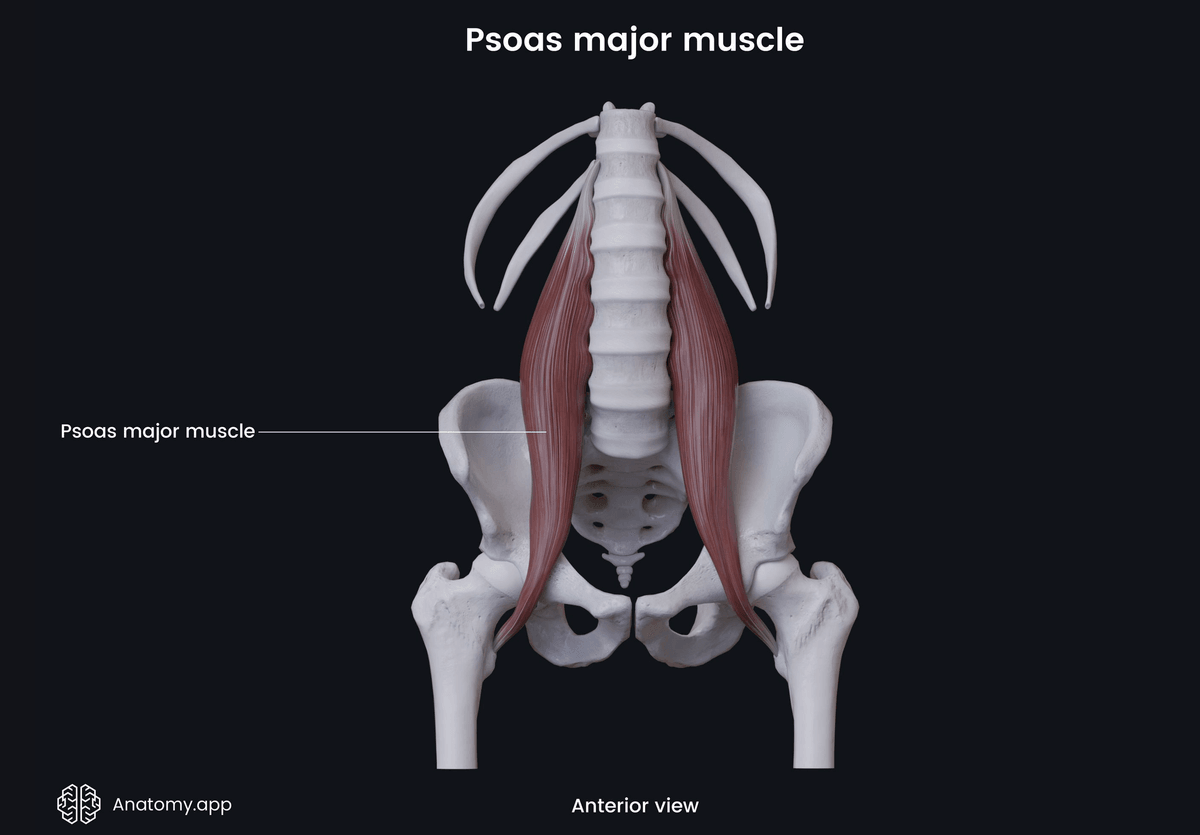
The psoas is the only muscle that connects the lower back to the thigh bone (femur) through the hip. Because it is deep within, it is not easily accessible unless you really really dig in, and many times strained and tired psoas muscles show up instead as lower back pain, tight inner thigh or hip pain.